
Discover the science behind ABA therapy, how it helps children learn, key ABA techniques, benefits, and why it’s one of the most effective autism interventions.
The Science Behind ABA Therapy: How It Helps Children Learn
Applied Behavior Analysis (ABA) therapy is one of the world’s most researched and evidence-based approaches for helping children with Autism Spectrum Disorder (ASD) and other developmental challenges build meaningful life skills. Rather than focusing only on behaviors, ABA helps children learn communication, social interaction, daily living skills, and independence through structured, individualized teaching strategies.
Parents often ask, “How does ABA therapy actually work?” The answer lies in decades of scientific research on how people learn. ABA uses positive reinforcement, observation, and data-driven decision-making to help children acquire new skills in ways that are measurable, practical, and tailored to each child’s needs.
What Is ABA Therapy?
Applied Behavior Analysis (ABA) is a scientific approach to understanding behavior and using learning principles to encourage positive, functional skills. Therapists identify behaviors that help children succeed and create personalized strategies to strengthen those behaviors over time.
Modern ABA is:
- Evidence-based
- Individualized
- Data-driven
- Goal-oriented
- Family-centered
- Adaptable across home, school, and clinic settings
The primary goal is to help children communicate, learn, interact, and participate more independently in everyday life.

The Scientific Foundation of ABA
ABA is based on the science of learning and behavior. Early research in behavioral psychology demonstrated that the environment influences behavior and that positive consequences increase the likelihood of desired behaviors being repeated.
Over time, ABA has evolved into a flexible, naturalistic, and child-centered approach supported by decades of research. Today, it emphasizes ethical practice, individualized goals, and meaningful skill development rather than simply reducing behaviors.
The ABC Model: Understanding Behavior
One of the core concepts in ABA is the ABC Model, which helps therapists understand why behaviors occur.
Antecedent
What happens immediately before a behavior?
Example:
A teacher asks a child to complete a puzzle.
↓
Behavior
The observable action.
Example:
The child walks away from the table.
↓
Consequence
What happens after the behavior?
Example:
The therapist encourages the child to return and rewards participation with praise.
Understanding this sequence allows therapists to teach more effective and meaningful behaviors.
Positive Reinforcement: The Heart of ABA
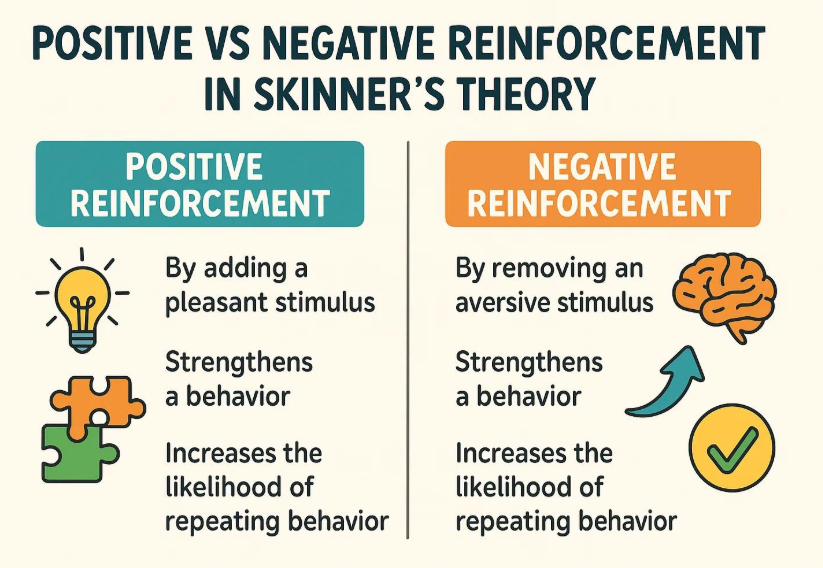
Positive reinforcement is one of the most effective teaching tools used in ABA.
When a child demonstrates a desired behavior, they immediately receive something meaningful, such as:
- Praise
- Favorite toys
- Playtime
- Stickers
- High-fives
- Preferred activities
This increases the likelihood that the behavior will occur again, helping children build confidence while learning in a supportive environment.
Evidence-Based ABA Teaching Methods
Every learner is unique, so therapists choose strategies based on individual goals.
1. Discrete Trial Training (DTT)
Structured lessons that teach one skill at a time using clear instructions and immediate feedback.
2. Natural Environment Teaching (NET)
Learning through play and everyday routines to promote functional skill development.
3. Task Analysis
Breaking complex activities such as brushing teeth into manageable steps.
4. Prompting and Fading
Providing support initially and gradually reducing assistance as independence develops.
Skills Children Learn Through ABA
ABA programs focus on meaningful developmental outcomes, including:
- Communication and language
- Social interaction
- Play skills
- Academic readiness
- Attention and focus
- Daily living skills
- Emotional regulation
- Independence
Programs are individualized to help each child build skills that improve participation at home, school, and in the community.

Benefits of ABA Therapy
Research has consistently shown improvements in:
- Communication
- Language development
- Social relationships
- Classroom participation
- Learning readiness
- Adaptive behavior
- Daily living skills
- Reduction in challenging behaviors
- Greater independence
Children who begin therapy early often experience the strongest developmental gains, although ABA can be beneficial at many stages of life.
Common Questions About ABA
Is ABA only for autism?
No. While ABA is widely used for Autism Spectrum Disorder, its principles can also support individuals with other developmental and learning needs.
Does ABA change a child’s personality?
No. Modern ABA focuses on building skills, improving communication, and reducing barriers to learning while respecting each child’s individuality and preferences.
How many therapy hours are needed?
Programs are individualized. Depending on a child’s goals, therapy may range from approximately 15 to 40 hours per week.
Is ABA Therapy Right for Your Child?
Every child develops differently, and there is no one-size-fits-all approach. A comprehensive evaluation by a qualified ABA professional can help determine whether ABA therapy is appropriate and identify personalized goals.
Early, consistent intervention combined with family involvement often provides the greatest opportunity for long-term success.
Conclusion
The science behind ABA therapy is rooted in decades of behavioral research and a deep understanding of how children learn. By combining positive reinforcement, individualized teaching methods, and ongoing progress monitoring, ABA empowers children to develop communication, independence, and lifelong learning skills.
Whether delivered at home, in school, or in a therapy center, evidence-based ABA provides practical strategies that help children reach their full potential while supporting families every step of the way.

Ready to Learn More?
If you’re exploring evidence-based autism support, Dew Drops ABA offers compassionate, individualized ABA therapy and QABA-approved ABA Technician (ABAT) training designed to support children, families, and future professionals.
Schedule a consultation today and discover how ABA can make a meaningful difference.