
Learn practical ABA strategies teachers can use in classrooms to improve behavior, increase student engagement, and create inclusive learning environments.
How Teachers Can Use ABA Strategies in Classrooms
Today’s classrooms include students with different learning styles, communication needs, attention spans, and behavioral challenges. Creating an engaging and inclusive learning environment can be difficult without structured, evidence-based strategies.
Applied Behavior Analysis (ABA) provides practical techniques that help teachers encourage positive behaviors, improve classroom participation, reduce disruptions, and support every learner. Although ABA is widely known for supporting students with Autism Spectrum Disorder (ASD), its strategies are equally valuable for students with ADHD, learning differences, and even typically developing children.
What Is ABA in Education?
Applied Behavior Analysis (ABA) is the science of understanding how behavior is influenced by the environment. In educational settings, teachers use ABA principles to teach new skills, reinforce positive behaviors, and create structured classrooms where students can thrive.
Modern ABA emphasizes:
- Positive reinforcement
- Clear expectations
- Individualized support
- Data-informed decision making
- Skill development
- Inclusive teaching practices
Rather than focusing on punishment, ABA helps students learn appropriate behaviors while building confidence and independence.
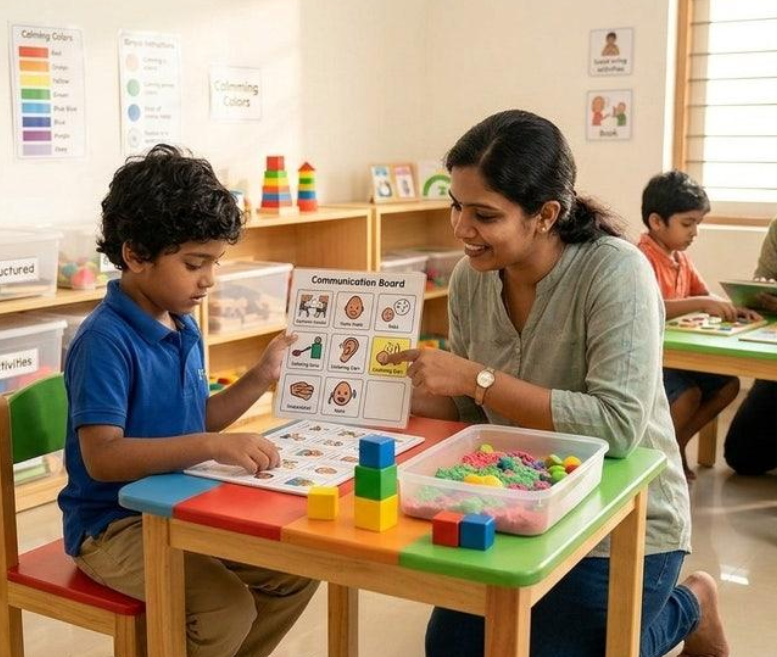
Why ABA Strategies Work in Classrooms
ABA is built on several evidence-based principles that make learning more effective:
- Behavior is influenced by the environment.
- Every behavior serves a purpose.
- Positive behaviors can be taught and reinforced.
- Progress can be measured and adjusted.
When these principles are consistently applied, classrooms become more predictable, students understand expectations more clearly, and teachers spend less time managing disruptions
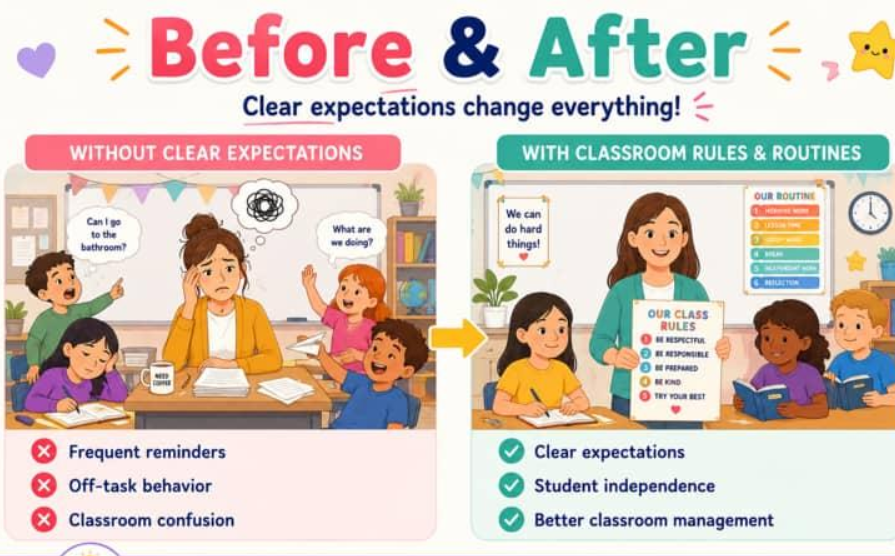
1. Use Positive Reinforcement
Positive reinforcement is one of the most effective classroom management strategies.
When students demonstrate appropriate behavior, immediately acknowledge it with something meaningful, such as:
- Praise
- Stickers
- Reward points
- Classroom privileges
- Extra activity time
For example:
“Great job raising your hand before speaking.”
Specific praise encourages students to repeat positive behaviors and builds motivation.
2. Set Clear Classroom Expectations
Students perform better when expectations are simple, specific, and visible.
Instead of saying:
❌ Be good
Say:
✅ Raise your hand before speaking.
✅ Walk quietly in the classroom.
✅ Listen when others are talking.
Visual reminders and consistent reinforcement help students understand classroom routines more effectively.
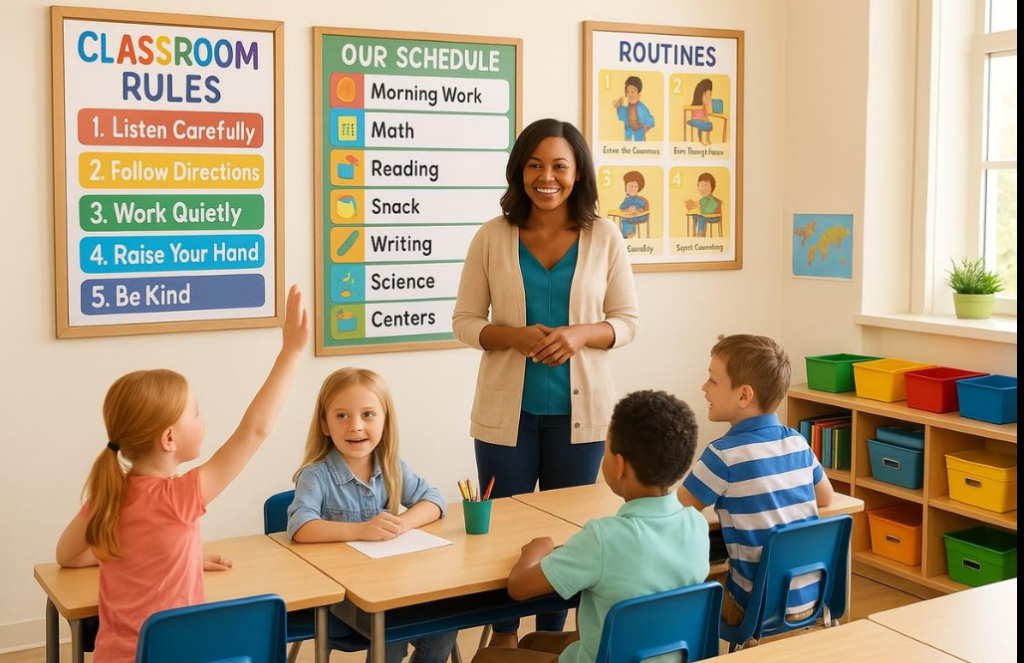
3. Use Visual Supports
Many students benefit from visual information more than verbal instructions alone.
Helpful visual supports include:
- Daily schedules
- First-Then boards
- Visual timers
- Choice boards
- Step-by-step task cards
Visual supports reduce anxiety, improve transitions, and encourage independence.
4. Prevent Problems Before They Start
Successful classroom management begins before challenging behaviors occur.
Teachers can:
- Give advance warnings before transitions.
- Offer limited choices.
- Arrange seating strategically.
- Build movement breaks into lessons.
- Remind students of expectations before difficult activities.
These proactive strategies reduce frustration and improve classroom participation.
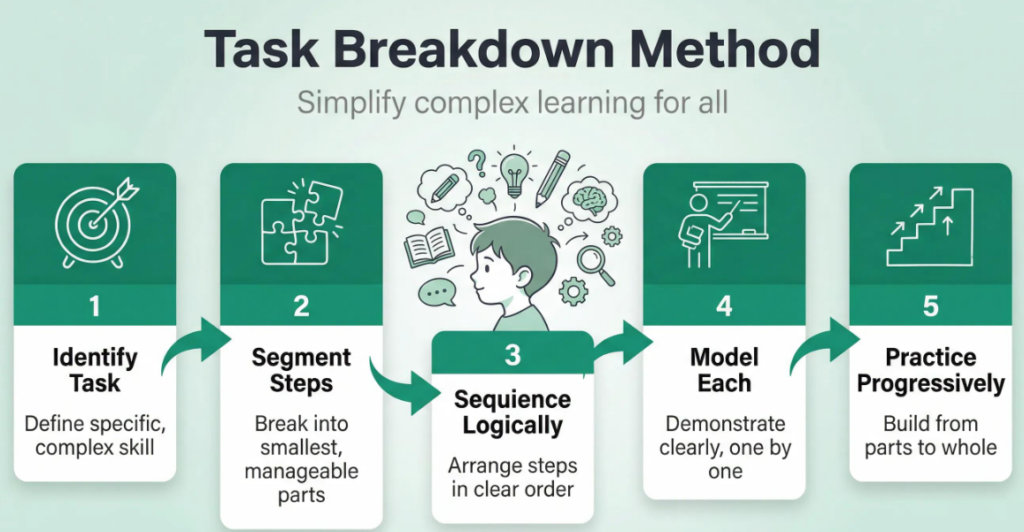
5. Break Large Tasks into Smaller Steps
Complex assignments can overwhelm students.
ABA recommends Task Analysis, which divides activities into manageable steps.
Example:
Science Project
- Read instructions
- Gather materials
- Complete research
- Create presentation
- Practice
- Present
This approach improves confidence and increases student success.
6. Use Prompting and Gradually Reduce Support
Teachers often provide assistance through:
- Physical prompts
- Gestural prompts
- Verbal prompts
- Visual prompts
As students become more confident, prompts are gradually reduced, encouraging independence and long-term learning.
7. Understand Why Behaviors Occur
Every behavior has a purpose.
Students may seek:
- Attention
- Escape from difficult tasks
- Access to preferred activities
- Sensory input
Understanding the reason behind a behavior helps teachers teach more appropriate replacement skills rather than simply reacting to the behavior.
8. Use Simple Data to Measure Progress
Teachers don’t need complicated systems to track success.
Simple methods include:
- Behavior tally sheets
- ABC observation notes
- Daily behavior charts
- Skill checklists
Regular progress monitoring allows teachers to adjust strategies and celebrate improvements.

Quick ABA Tips Every Teacher Can Start Today
You don’t need to transform your classroom overnight.
Start with these practical ideas:
- Post a daily visual schedule.
- Praise positive behaviors immediately.
- Use visual timers during transitions.
- Give students simple choices.
- Recognize specific positive actions instead of general praise.
- Stay consistent with expectations.
Small, consistent changes often lead to significant improvements over time.
Common Mistakes to Avoid
Even experienced educators can unintentionally reduce the effectiveness of ABA strategies.
Avoid:
- Inconsistent reinforcement
- Focusing only on negative behavior
- Giving up too quickly
- Using only punishment
- Over-relying on verbal instructions without visuals
Teaching positive replacement behaviors is far more effective than simply correcting mistakes.
Frequently Asked Questions
Can general education teachers use ABA strategies?
Yes. ABA principles are effective for all students, not only those with autism.
Do teachers need ABA certification?
No. Many ABA strategies can be implemented through professional development and practical classroom training.
Are ABA strategies only useful for autism?
No. They also support students with ADHD, learning disabilities, behavioral challenges, and diverse learning needs.
What is the most important ABA strategy for teachers?
Positive reinforcement combined with clear expectations and consistent routines is one of the most effective classroom approaches.
How can schools build more inclusive classrooms?
By combining ABA strategies, visual supports, collaboration with families, and individualized teaching methods.
Final Thoughts
Creating an inclusive classroom is about more than managing behavior—it’s about helping every student learn, participate, and succeed. ABA strategies give teachers practical, evidence-based tools to build structured routines, reinforce positive behaviors, and support diverse learning needs.
By introducing simple techniques such as positive reinforcement, visual supports, task analysis, and consistent expectations, educators can create calmer, more engaging classrooms where all students have the opportunity to thrive. These approaches not only benefit children with autism and developmental differences but also improve learning outcomes for the entire class.
Ready to Learn More About ABA?
If you’re an educator, therapist, or aspiring behavior professional, the QABA-approved ABA Technician (ABAT) Course by Dew Drops and Child Hub provides practical, evidence-based training to help you confidently apply ABA strategies in classrooms, clinics, and community settings.