Autism Spectrum Disorder (ASD) is a neurodevelopmental condition that affects how a person communicates, interacts with others, learns, and experiences the world around them. Every child with autism is unique, which is why it is called a “spectrum.” Some children require significant support in daily life, while others are highly independent and excel academically or professionally.
With increasing awareness and better access to early diagnosis, families today have more opportunities than ever to help children with autism develop meaningful skills and reach their full potential.
What Is Autism Spectrum Disorder?
Autism Spectrum Disorder is a lifelong developmental condition that primarily affects:
- Communication skills
- Social interaction
- Behaviour and interests
- Sensory processing
Every child develops differently. Autism is not a disease and does not have a single appearance or behaviour pattern. Instead, each individual has unique strengths, abilities, and challenges.
Early Signs of Autism
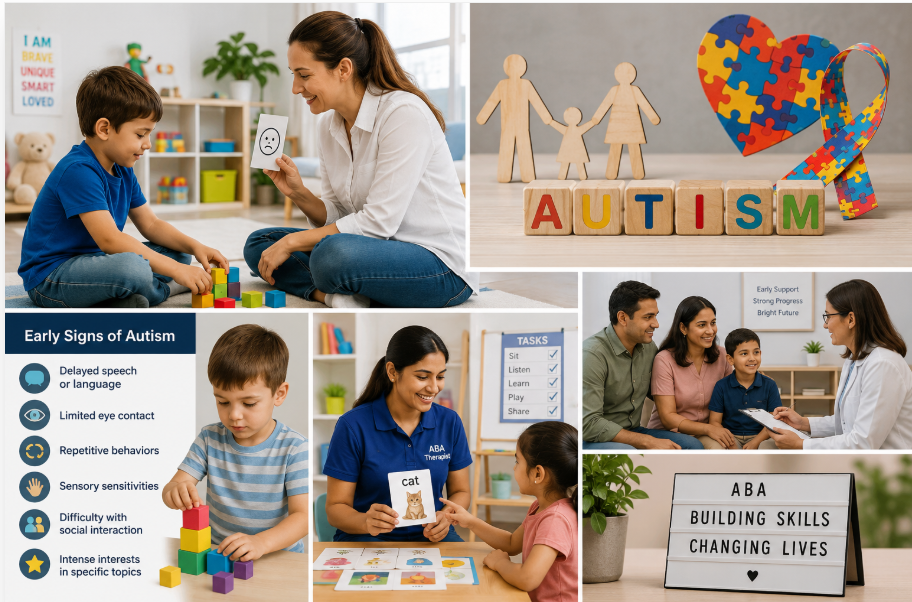
Recognizing autism early can make a significant difference in a child’s development. While signs vary from child to child, some common early indicators include:
- Delayed speech or language development
- Limited eye contact
- Difficulty responding to their name
- Repetitive movements such as hand flapping or rocking
- Strong preference for routines
- Sensitivity to sounds, lights, textures, or smells
- Difficulty engaging in social play
- Highly focused interests in specific objects or topics
Having one or more of these signs does not automatically mean a child has autism. A comprehensive evaluation by qualified healthcare professionals is essential for an accurate diagnosis.
Why Early Diagnosis Matters
Early identification allows children to receive appropriate support during the most important years of brain development.
Research consistently shows that early intervention can improve:
- Communication abilities
- Learning readiness
- Social interaction
- Daily living skills
- Emotional regulation
- Independence
Parents should seek professional guidance whenever developmental concerns arise rather than waiting to see if a child “grows out of it.”
How Applied Behavior Analysis (ABA) Helps
Applied Behavior Analysis (ABA) is one of the most widely researched and evidence-based approaches for supporting children with autism.
Modern ABA focuses on helping children develop practical, meaningful skills through individualized teaching methods.
ABA can help children improve:
- Communication
- Social skills
- Play skills
- Self-care routines
- Classroom participation
- Positive behaviour
- Independence
Today’s ethical ABA programs are personalized, measurable, and designed around each child’s strengths and goals while promoting dignity and respect.
The Role of Schools and Families
Children thrive when parents, teachers, and therapists work together.
Inclusive educational environments support children by:
- Creating structured learning experiences
- Encouraging social participation
- Using positive teaching strategies
- Adapting classrooms to individual learning needs
- Maintaining consistent communication with families
A collaborative approach helps children generalize skills across home, school, and community settings.
What Is an ABAT Course?
The Applied Behavior Analysis Technician (ABAT) course provides foundational knowledge of ABA principles and practical behaviour support strategies.
It typically covers:
- Behaviour observation
- Data collection
- Positive reinforcement
- Communication strategies
- Professional ethics
- Skill development techniques
The course is suitable for:
- Teachers
- Special educators
- Psychology students
- Therapists
- Caregivers
- Parents interested in understanding ABA
- Individuals planning a career in autism intervention
Supporting Children with Autism
Every child deserves opportunities to learn, communicate, and participate fully in their community.
Families can support children by:
- Learning about autism from reliable sources
- Seeking early professional assessment
- Participating actively in therapy goals
- Celebrating small developmental milestones
- Building consistent daily routines
- Working closely with educators and therapists
Progress looks different for every child, and each achievement is meaningful.